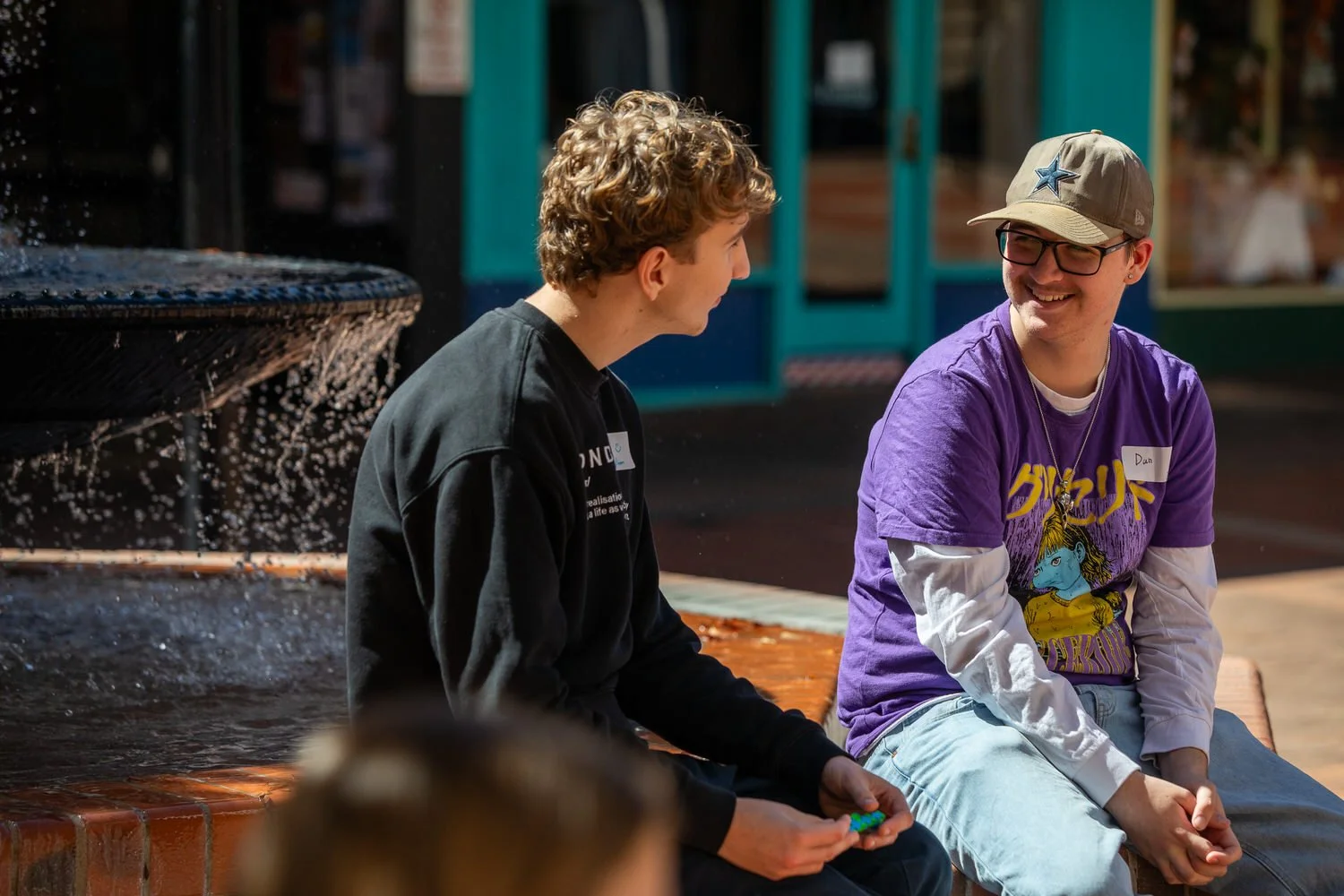
Sonder staff with a young participant of their signature Changemaker program.
15 SEPTEMBER 2026. In the 2025 Mission Australia Youth Survey of more than 17,000 people aged 14 to 19, climate change and the environment ranked as the third most pressing national concern, behind cost of living and mental health.
Separate research analysing the Youth Survey found that young people who are very or extremely concerned about climate change are significantly more likely to experience high psychological distress than those who aren't concerned at all.
It's this reality that Sonder Youth's CEO, Avalon Hope Bourne, set out to address. As a 2024 Churchill Fellow, she spent two months travelling to six countries, investigating what actually helps young people manage climate anxiety and how schools can play a part.
Over more than 30 conversations with educators, psychologists, community leaders and students, from Nepal to Iceland, a clear picture emerged.
“Climate anxiety is not a disorder. It is a rational response to an existential threat.”
Climate anxiety is not a disorder
One of Avalon's central findings is that climate anxiety is a rational response to a real threat, not something to be fixed or suppressed. The task for educators, she argues, is not to eliminate that anxiety but to help young people live with it constructively.
Five practices that help
Across her Fellowship, Avalon identified five practices that consistently helped young people turn distress into resilience. As she writes,
"These five practices... are not add-ons. They are essential if climate education is to meet the psychological needs of young people living in a climate-affected world."
Emotional regulation – naming and working through difficult feelings like fear, grief and anger, rather than avoiding them.
Connection – building community so young people know they aren't facing the crisis alone.
Taking action – collective, achievable projects that build a sense of agency and counter powerlessness.
Balanced, solutions-focused learning – showing real progress alongside the challenges, so students don't fall into denial or despair.
Creativity – using art, storytelling and play to process emotion and imagine hopeful futures.
Two of these stood out to her as especially powerful: connection and agency. On connection, she writes:
"The effects of the climate crisis are not something anyone is experiencing alone. So it follows that navigating them should be a collective experience as well."
On agency, she notes:
"Without opportunities to act, young people risk internalising the scale of the crisis as insurmountable."
Bringing it home
Avalon's next step is to test these findings locally. She plans to pilot a Climate Change Learning Collaborative across five schools on the NSW South Coast and Illawarra, including communities directly affected by bushfires and flooding, in partnership with teachers, researchers and students.
"This Fellowship has shown me that climate-anxiety-informed education is both possible and necessary. The next phase is to test it in Australian schools, with Australian students and teachers."
Avalon's full Fellowship report is available through the Winston Churchill Memorial Trust.